
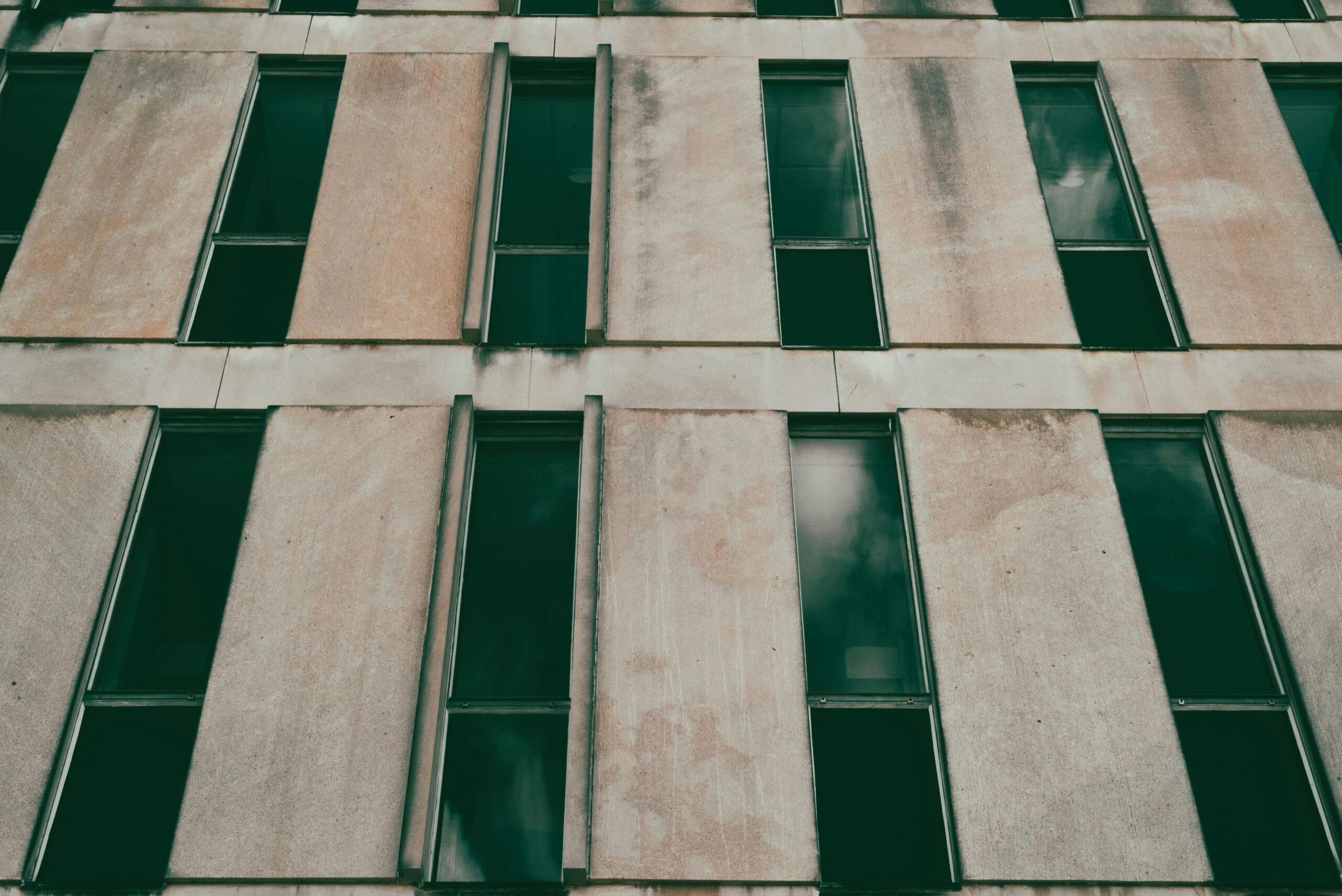
Black staining on stone buildings is a common problem across commercial and historic properties throughout the UK. Over time, stone surfaces exposed to weather, pollution, moisture, and traffic can begin to develop dark patches that affect the appearance of the building.
In many cases, the staining becomes more noticeable around entrances, window surrounds, ledges, and areas exposed to constant rainfall or traffic pollution. While these marks may appear permanent, specialist cleaning methods can often remove the buildup safely without damaging the surface underneath.
Below, we’ll look at what causes black staining on stonework and why DOFF cleaning is widely used on sensitive masonry surfaces.
What Causes Black Staining on Stonework?
Stone naturally absorbs moisture and airborne contaminants over time. As dirt, algae, carbon deposits, and environmental pollutants settle into the surface, darker staining begins to develop gradually across the building. This is particularly common on older masonry and porous stone surfaces exposed to wet weather throughout the year.
Common Sources of Stone Discoloration
Several environmental factors can contribute to black staining on commercial properties. In many cases, the marks are caused by a combination of pollution, moisture, and organic buildup rather than one single issue.
Common causes include:
- carbon pollution from traffic
- algae and biological growth
- trapped moisture
- dirt buildup
- poor drainage
- weather exposure
- ageing stone surfaces
Buildings located in shaded or high-traffic areas often experience faster staining because moisture stays on the surface for longer and airborne pollutants settle more easily.
Over time, this buildup can make stonework look older, darker, and poorly maintained. Properties with neglected external surfaces may eventually require specialist commercial cleaning to restore the appearance of the masonry safely.
Why Harsh Pressure Washing Can Damage Stone
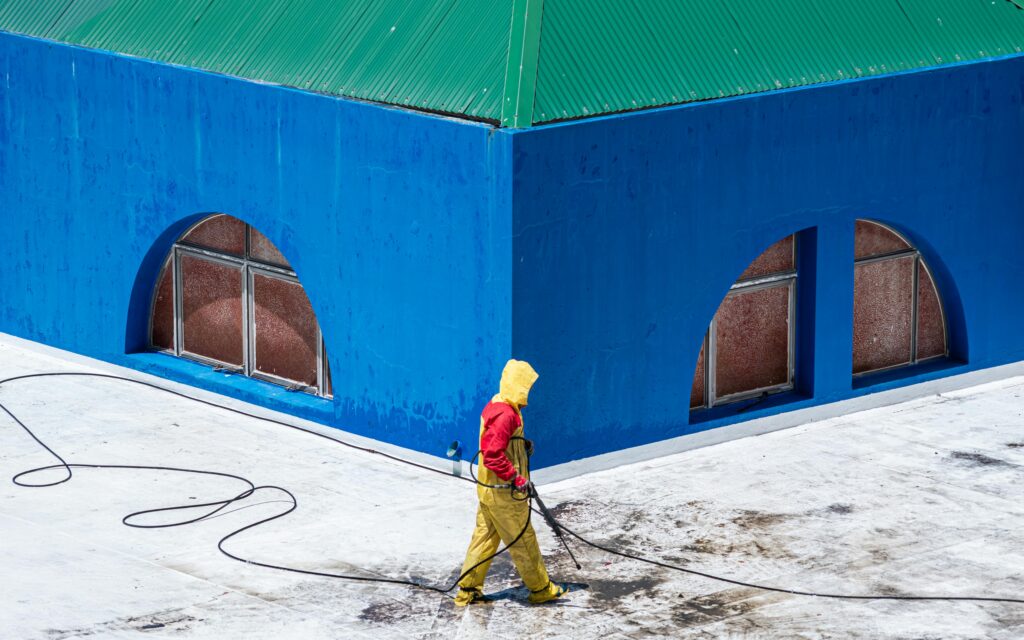
One of the most common mistakes property owners make is attempting to remove black staining using aggressive pressure washing equipment. While high-pressure cleaning may remove surface dirt temporarily, excessive force can damage softer masonry materials and weaken the outer surface of the stone.
Over time, this can lead to:
- surface erosion
- damaged pointing
- moisture penetration
- premature stone deterioration
Older commercial properties and listed buildings are particularly vulnerable to these issues. For more delicate surfaces, professional DOFF cleaning is often recommended because it relies on heat and controlled pressure rather than aggressive force.
How DOFF Cleaning Removes Black Staining
DOFF cleaning is a specialist steam-based cleaning system designed for sensitive masonry and historic surfaces. The process uses high-temperature steam delivered at low pressure to remove carbon staining, algae, moss, paint residue, biological growth, and surface pollutants.
Because the system uses minimal pressure, it allows contractors to clean stonework thoroughly while reducing the risk of damaging the material underneath.
Why DOFF Cleaning Is Commonly Used on Stone Buildings
Many commercial and heritage properties contain softer stone materials that can deteriorate if cleaned too aggressively. DOFF systems are widely used across:
- sandstone buildings
- churches
- listed properties
- public buildings
- historic façades
- commercial stonework
For commercial properties dealing with wider exterior staining issues, combining commercial cleaning services with specialist stone treatment can help improve the overall appearance of the property more effectively.
Some Staining May Indicate Larger Issues
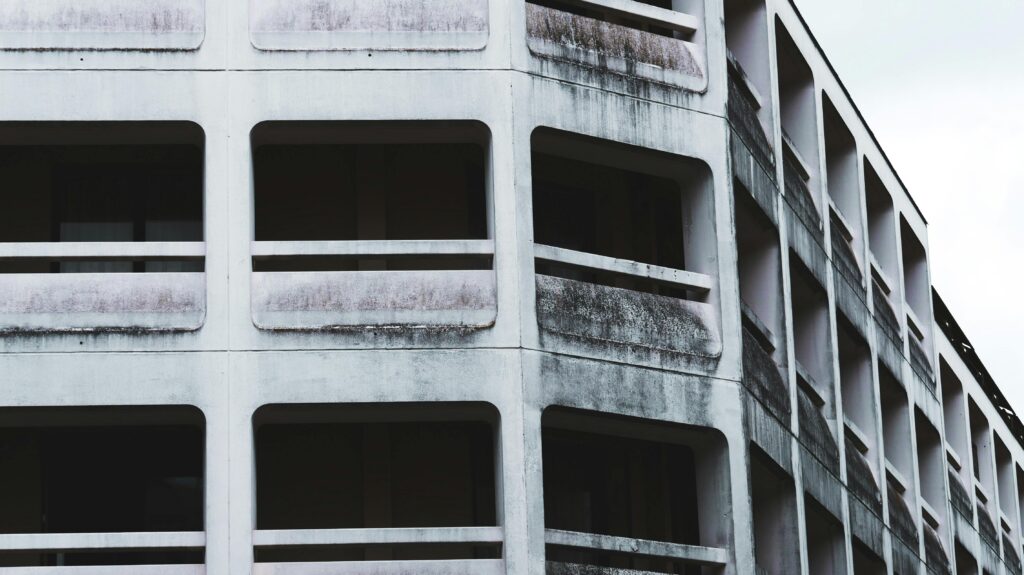
In some cases, black staining is more than a cosmetic problem. Persistent discoloration can sometimes point to:
- drainage problems
- trapped moisture
- leaking gutters
- damaged pointing
- poor airflow around the building
Without proper assessment, these underlying issues may continue causing staining even after the surface has been cleaned. Professional inspections help determine the safest cleaning approach while identifying whether repairs or maintenance work may also be required.
Surrounding hard surfaces may also require separate commercial pressure washing to remove dirt and organic buildup from access routes, pavements, and external walkways.
How Regular Maintenance Helps Protect Stonework
Stone buildings naturally face constant exposure to weather and pollution throughout the year. Without routine maintenance, staining can gradually return and become more difficult to remove over time.
Regular exterior maintenance helps reduce long-term staining, prevent biological buildup, improve overall appearance, protect masonry surfaces, and maintain a professional image.
Properties with rendered external finishes may also benefit from periodic render cleaning to prevent algae and surface discoloration from spreading across surrounding areas of the building.
Final Thoughts
Black staining on stonework is usually caused by a combination of pollution, moisture, algae, and environmental exposure. While the buildup may appear permanent, specialist cleaning systems are often capable of restoring the surface safely.
DOFF cleaning remains one of the most effective methods for cleaning delicate stonework because it removes contaminants using heat and controlled pressure rather than aggressive force.
For commercial and historic buildings, choosing the right cleaning method plays an important role in protecting the condition and appearance of the property over the long term. Contact us today at Brew Contract Cleaning to help you with these issues.